
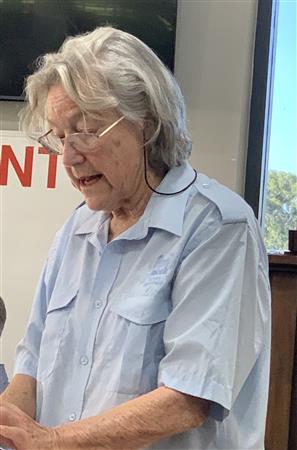
 Dr Judith Odgaard is WA Branch President and WA Representative of Sustainable Population Australia (SPA), and she travelled all the way from the Avon Valley to talk about population growth and the effects it has on the lands where human beings exist. Throughout the ages concerns about population have always existed – from the times of Plato, Aristotle and Caesar Augustus right through until the modern era. Unfortunately, population growth occurs at geometric rates, whereas land productivity can be increased only arithmetically. A 1968 think-tank called the Club of Rome sought to introduce limits on population growth, because it predicted that the then rates of resource consumption would lead to total collapse by the 2070s. This was, of course, highly contentious and at the same time Paul Erlich published a book called The Population Bomb which proposed population limits to counteract future inadequate food supplies. He came up with a formula I = PAT, where I is environmental impact; P is population size; A is affluence; and T is technology. China came up with a one child policy – for a while – and India increased its average food per person by 17% but at the same time its population grew by half a billion! There is no doubt that population numbers drive climate change, and the biggest problem is Africa. Thank you, Judith - there was lots to think about in this talk!