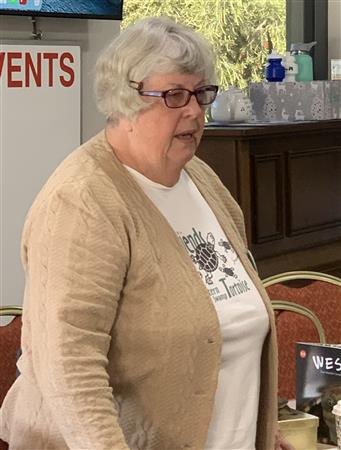
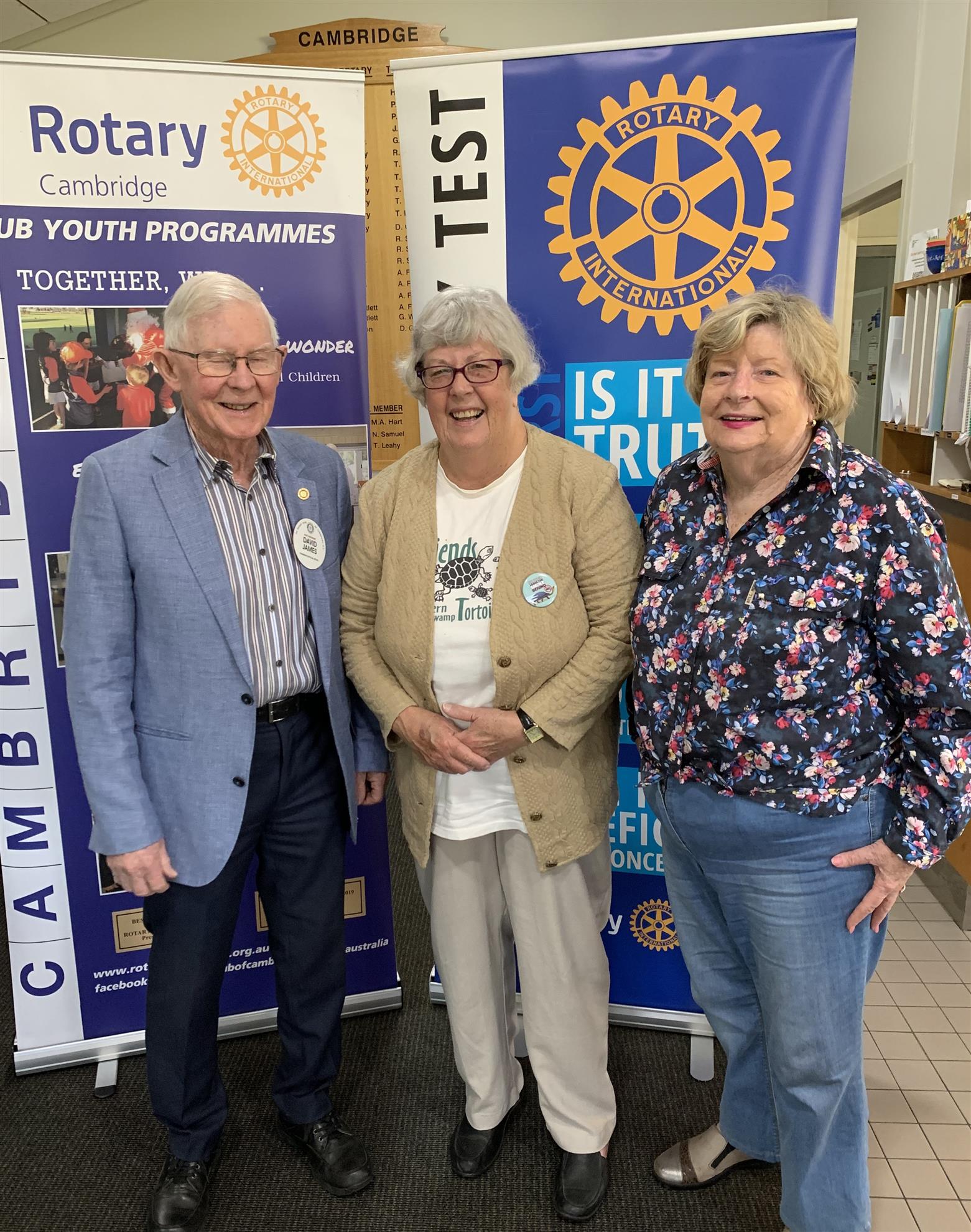
 Jan Bant has been Chair of the Friends of the Western Swamp Tortoise Inc. since it was incorporated 19 years ago, and she came to our meeting to tell us all about this critically endangered creature. The Tortoise (WST) was thought to have been extinct for over one hundred years until a young boy found one at Bullsbrook in 1953. WSTs are found only in the Swan Valley, and they are slow to grow and slow to breed. It takes at least 8 years for a WST to reach adulthood, and some start to breed only at the age of about 20. They are found in the Twin Swamps and Ellen Brook Reserves, but the latter is the only viable place for them to breed in the wild. Typically they lay one or two eggs per annum. As a result, there is a comprehensive breeding programme at the Perth Zoo, and at present there are 244 in that location. WSTs are carnivores which eat only minute insects, and when the waters in the swamp seasonally disappear, they go underground and hibernate for six months. Their numbers are adversely affected by climate change, their slow breeding, and by feral enemies such as foxes, and at Ellen Brook they are protected by electric fencing and underground plastic shields. Housing developments are also having an impact. ECU is allowing some students to analyse data now, and there is a comparison on the cards between natural birth versus incubation.